
Bachelor of Science in Radiologic Technology (B.S. in Rad Tech)
Prepare for licensure and long-term career growth through a nationally accredited program with intensive clinical training and a proven 2+2 pathway.
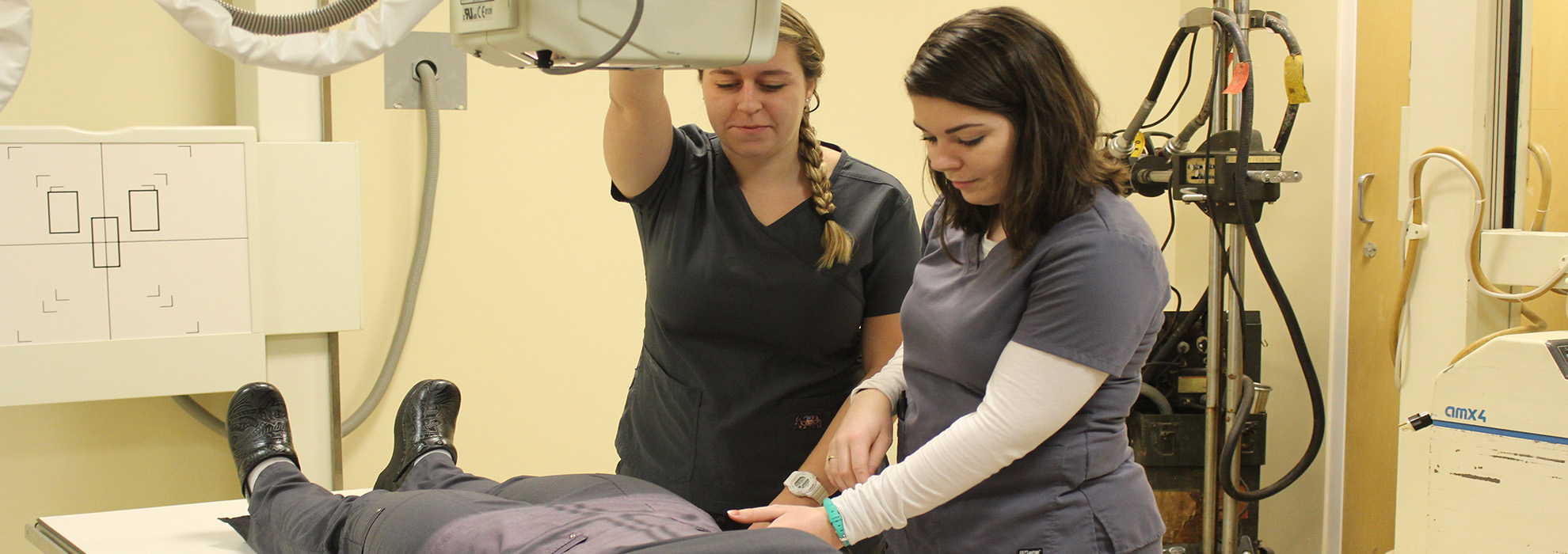
A Hands-On Program and Degree that’s in High Demand.
Degree: Bachelor of Science (B.S.)
Program Delivery: On Campus with Clinical Rotations
Next Term: Fall 2026
Program Duration: 4 years (2+2 format)
Total Credit Hours: 120
The Radiologic Technology program at MCLA is currently at capacity for transfer students for the upcoming academic year. Prospective transfer students interested in health-related fields are encouraged to explore our programs in Health Sciences, Nursing and Public Health and Community Health Education and to contact nicole.porther@mcla.eu for more information.
Why Choose MCLA's B.S. in Rad Tech?
MCLA’s Radiologic Technology program combines rigorous academics, extensive hands-on clinical training, and personalized faculty support. Designed for students entering the field for the first time, the program prepares graduates for licensure, employment, and long-term advancement in medical imaging.

100% Board Pass Rate
Graduates from the Class of 2024 achieved a 100% first-attempt pass rate on the American Registry of Radiologic Technologists (ARRT) certification exam, reflecting focused preparation and strong alignment with licensure standards.

1,000+ Clinical Hours
Students complete over 1,000 hours of supervised clinical education at major regional hospitals during the junior and senior years, gaining real-world experience across multiple imaging environments.

No Experience Needed
This program is built for first-time college students and career starters. No prior healthcare or imaging experience is required, as foundational coursework prepares students before entering the clinical phase.
Career Outlook & Program Outcomes
Where This Degree Can Take You
A bachelor’s degree in radiologic technology serves as a gateway to advanced roles, leadership opportunities, and specialized imaging pathways. It expands career mobility beyond entry-level practice.
Career Opportunities
- Radiologic Technologist: Perform diagnostic imaging procedures in hospitals, clinics, and outpatient centers.
- Clinical Supervisor: Oversee imaging operations, staff coordination, and clinical quality standards.
- Radiology Department Manager: Manage workflow, compliance, scheduling, and equipment in imaging departments.
- Advanced Imaging Pathways: Prepare for further training in modalities such as CT, MRI, mammography, or interventional imaging
Skills You Will Develop
Admission Requirements
Admission to the clinical phase is competitive & capacity-limited
- Completion of pre-clinical coursework
- Minimum GPA as outlined by program policy
- Compliance with health, safety, and background requirements
The Radiologic Technology program at MCLA is currently at capacity for transfer students for the upcoming academic year. Prospective transfer students interested in health-related fields are encouraged to explore our programs in Health Sciences, Nursing and Public Health and Community Health Education and to contact
Radiologic Technology Curriculum & the "2+2" Roadmap
Two Years of Foundations. Two Years of Professional Focus & Practice. This structured progression ensures students are academically prepared before entering clinical environments.
Pre-Clinical Phase (Years 1–2)
Focus on foundational sciences and general education.
Anatomy and Physiology
Physics
Mathematics
Introduction to Healthcare
Clinical Phase (Years 3–4)
Begin professional coursework and hospital-based training.
Advanced Imaging Procedures
Patient Care and Ethics
Clinical Practicum
Radiographic Pathology & Positioning
Spotlight Courses
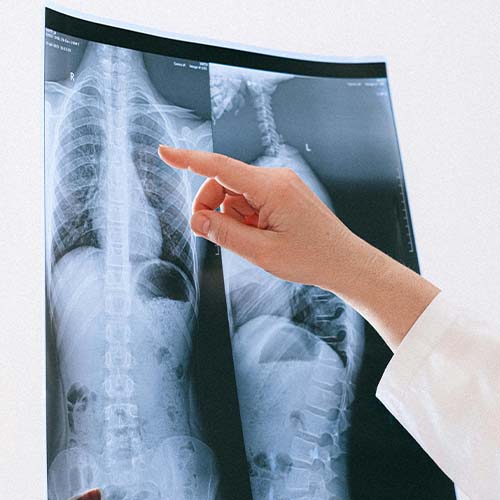
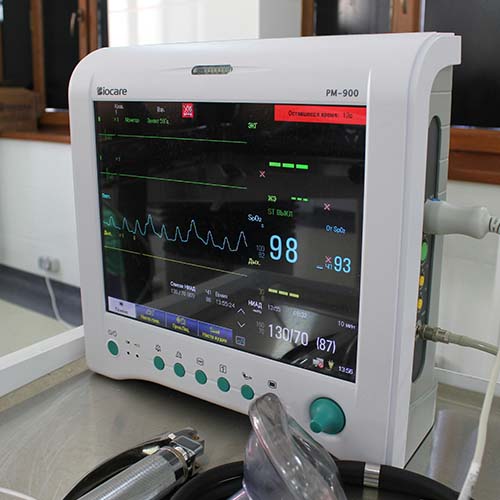
Faculty
Meet Your Mentors
Additional Details on the Radiologic Technology Program
The MCLA Radiologic Technology program is accredited by the Joint Review Committee on Education in Radiologic Technology and the program has a full 8-year accreditation with the next review date in November 2032.
The MCLA Radiologic Technology program is accredited by:
Joint Review Committee on Education in Radiologic Technology
20 North Wacker Drive, Suite 2850 Chicago, IL 60606-3182
312-704-5300
mail@jrcert.org
The program has a full 8-year accreditation with the next review date in November 2032. General program accreditation information and the current accreditation award letter.
MCLA is regionally accredited by the New England Commission of Higher Education.
The BS degree in Radiologic Technology prepares students to meet the needs of the medical imaging community through an advanced level of education with a broader knowledge base that meets the demands facing the healthcare industry today. With a foundation in the liberal arts, the competency-based program fosters excellence by expanding the curriculum in the application of current, developing, and advanced imaging technologies.
The Radiologic Technology graduate will use appropriate interpersonal skills, think critically, embrace diversity, employ healthcare research, and apply appropriate radiation safety measures becoming ethical professional leaders dedicated to the health and safety of their patients.
Students will demonstrate communication skills:
- Students will learn to communicate effectively with diverse populations.
- Students will write effectively.
- Students will demonstrate proper oral communication skills.
Students will become clinically competent:
- Students will utilize appropriate radiation safety techniques.
- Students will position patients accurately.
Students will utilize critical thinking skills:
- Students will perform non-routine procedures.
- Students will select appropriate technical factors for variations in body habitus.
- Students will be able to analyze images.
Students will display professionalism:
- Students will be knowledgeable of advanced imaging modalities.
- Students will display proper professionalism.
We're proud of our program and it's results: Program Effectiveness Data
Requirements:
BIOL 101 Seminar for Entering Majors (1 cr)
BIOL 150 Introduction to Biology I: Cells (4 cr)
BIOL 342 Anatomy & Physiology I (4 cr)
BIOL 343 Anatomy & Physiology II (4 cr)
HLTH 110 Introduction To Health Care (3 cr)
HLTH 105 Medical Terminology (1 cr)
HLTH 210 Human Growth & Development (3 cr)
HLTH 300/CCAP 300 Ethical Issues in Health Care (3 cr)
CHEM 150 Introduction to Chemistry I (4 cr)
CHEM 152 Introduction to Chemistry II (4 cr)
MATH 150 Pre-calculus (or College Algebra) (3 cr)
MATH 232 Introduction to Statistics (3 cr)
PSYC 100 Introduction To Psychology (3 cr)
Radiologic Technology Courses:
RADT 300 Introduction to Radiologic Sciences (2 cr)
RADT 305 Radiographic Physics (3 cr)
RADT 310 Radiographic Positioning I with Lab (4 cr)
RADT 320 Radiographic Positioning II with Lab (4 cr)
RADT 330 Radiographic Exposures (3 cr)
RADT 340 Digital Imaging, Processing and Quality (3 cr)
RADT 350 Radiation Protection and Biology (3 cr)
RADT 355 Clinical Radiography I (2 cr)
RADT 365 Clinical Education II (3 cr)
RADT 370 Radiographic Pathology (3 cr) online, asynchronous
RADT 420 Advanced Imaging and Pharmacology (3 cr)
RADT 431 Principles of CT I or RADT 434 Principles of Mammography I (3 cr) online,
asynchronous
RADT 432 Principles of CT II or RADT 435 Principles of Mammography II (3 cr) online,
asynchronous
RADT 440 Radiographic Critique (3 cr)
RADT 455 Clinical Radiology III (6 cr) Summer Session
RADT 465 Clinical Radiology IV (4 cr)
RADT 475 Clinical Radiology V (4 cr)
RADT 480 Senior Seminar (3 cr)
Academic Catalog for Radiologic Technology
Please note that students are required to attend at least one summer session to complete
this degree. During this session, students are required to attend clinical sessions
a minimum of 40 hours per week for a period of 11 weeks. Students are encouraged not
to engage in activities which carry a significant time commitment during this session.
Transportation to clinical sites is the sole responsibility of the student. Students may travel up to 75 miles one way to clinical sites.
FAQs
Yes. Graduates may pursue additional certifications in advanced imaging modalities with further training.
A bachelor’s degree offers broader career mobility, eligibility for leadership roles, and stronger preparation for advanced imaging pathways.
Looking for More Information on MCLA's Radiologic Technology Program?
Reach Out to Us
We’ll share helpful information and student stories, and we promise not to flood your inbox.