
Bachelor of Arts (B.A.) in History
Study history through research, analysis, and discussion. At MCLA, students learn to find information, evaluate evidence, and communicate clearly across fields such as law, business, education, and public service.

Think critically. Analyze evidence. Communicate with clarity.
Degree: Bachelor of Arts (B.A.)
Program Delivery: On Campus
Next Term: Fall 2026
Why Choose History at MCLA?
MCLA's History program combines small, discussion-based classes with hands-on learning opportunities. Located in the Berkshires, students have direct access to museums, archives, and historical institutions that support research, internships, and real-world experience.

High-Impact Internships
MCLA's location provides access to regional museums, archives, and institutions where students can gain experience through internships, research opportunities, and applied historical work before graduation.

Public History & Archives
Students can pursue a Public History minor and engage in archival and research work. Projects such as Historic North Adams and North Adams Archives showcase student work in research, analysis, and communication.

Global Travel Courses
Faculty offer travel courses that allow students to experience history in context. These opportunities provide direct exposure to historical sites and enrich classroom learning through international study.
Career Outlook & Program Value
A history degree offers flexible career paths and steady earning potential, supported by skills that apply across many professional fields.
Where This Degree Takes You
A history degree opens paths across multiple fields, not just education. The ability to research, analyze evidence, and communicate clearly is valued in law, government, museums, and business environments.
Career Opportunities
- Attorney / Legal Professional
- Museum Curator or Archivist
- Government or Public Policy Analyst
- Educator
- Intelligence Analyst
- Business or Organizational Leader
Skills You Will Develop
Spotlight Courses


Faculty
Meet Your Mentors

MCLA Travel Courses

Brazil, Ireland, Japan, South Florida, South Africa, Belize, Ecuador, etc.
If you'd like to study somewhere new but aren't ready to spend an entire semester
away, MCLA's travel courses may be the perfect fit. Combining on-campus learning with
immersive on-site experiences, these courses provide a unique educational opportunity
beyond the classroom.
Pre-Law at MCLA
Considering a career in law? A J.D. can open doors to legal and nonlegal careers. MCLA offers personalized pre-law advising through Professor Samantha Pettey and has 3+3 agreements with the University of Massachusetts School of Law and Western New England University School of Law, allowing qualified students to begin law school after three years of undergraduate study.
Samantha Pettey, Professor of Political Science
413-662-5551
s.pettey@mcla.edu
Typical Junior Year time-Frame for the Application Process to Either 3+3 Program
September-October
- Student assesses academic performance to date to ensure that the GPA requirement has been met and 50% of required baccalaureate credits have been earned.
- Student prepares for the LSAT
October-December
- Student consults faculty advisor to plan course selection for spring semester of junior year to ensure that all requirements for the baccalaureate degree, other than courses to be taken in the first year of law school, will be fulfilled.
- Student takes either October or December administration of the LSAT.
November-January
- Student receives LSAT score and determines if eligible to submit application.
- Student submits transcripts, including fall semester junior year grades, to Credential Assembly Service (CAS).
- Student submits application materials to the School of Law, including:
- Application form
- CAS report (includes undergraduate transcript and LSAT scores).
- Two letters of recommendation
- Resume
- Personal statement
- Letter of eligibility for 3+3 program from faculty advisor
January-March
- Student requests interview after application materials have been submitted.
- Student sits for February LSAT if necessary.
- In compliance with American Bar Association Standard 502(a), successful completion by the end of the junior year of three-quarters (i.e., no fewer than 90 credits) of the work acceptable for the bachelor’s degree at the College.
- Minimum of 45 credits earned in residence at the College.
- Successful completion of all university, college and major requirements for the bachelor’s degree, other than free electives and requirements for which a first-year Law School course is a substitute acceptable to the student’s major and college.
- A favorable decision by joint committee (comprised of Massachusetts College of Liberal Arts and WNEU Law School) which includes an interview during the applicant’s sophomore year.
- A cumulative grade point average of 3.0 or better for UMASS and 3.3 or better for WNEU.
- A minimum score of 150 on the Law School Admission Test (LSAT).
- Submission with the application for admission to the Law School and written recommendation from the College members of the Joint Programs Committee.
- Fulfillment of all other admissions requirements normally imposed by the Law School.
- At least two semesters of undergraduate pre-law advisement.
- Demonstration of character and fitness appropriate for admission to the American Bar Association.
Join the Conversation
History at MCLA extends beyond the classroom through student organizations and academic communities.
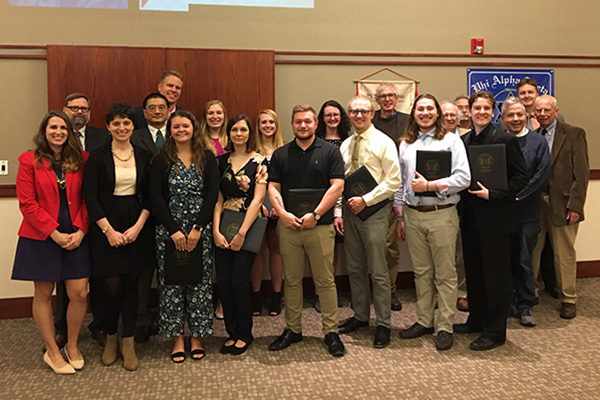 Phi Alpha Theta
The Department of History and Political Science encourages students to strive for membership in the national history honor society, Phi Alpha Theta. Our chapter, Alpha Beta Omega, was founded in 1985. New members are invited to join in the spring semester and are inducted into the chapter at the annual department banquet. For more information, contact anthony.daly@mcla.edu
FAQs
Yes. History develops skills in research, analysis, and argumentation that are widely applicable in legal studies and related fields.
Yes. Faculty-led travel courses provide opportunities to study history in different cultural and geographic contexts.
Yes. Many students combine history with other fields such as political science, taking advantage of the program's flexibility.
Looking for More Information on MCLA's History Programs?
Reach Out to Us
We’ll share helpful information and student stories, and we promise not to flood your inbox.